 Sabai
Getting Around: what a phrasebook leaves out
The context beside the words in chapter 6. Learn what the situation asks of you, as well as what to say.
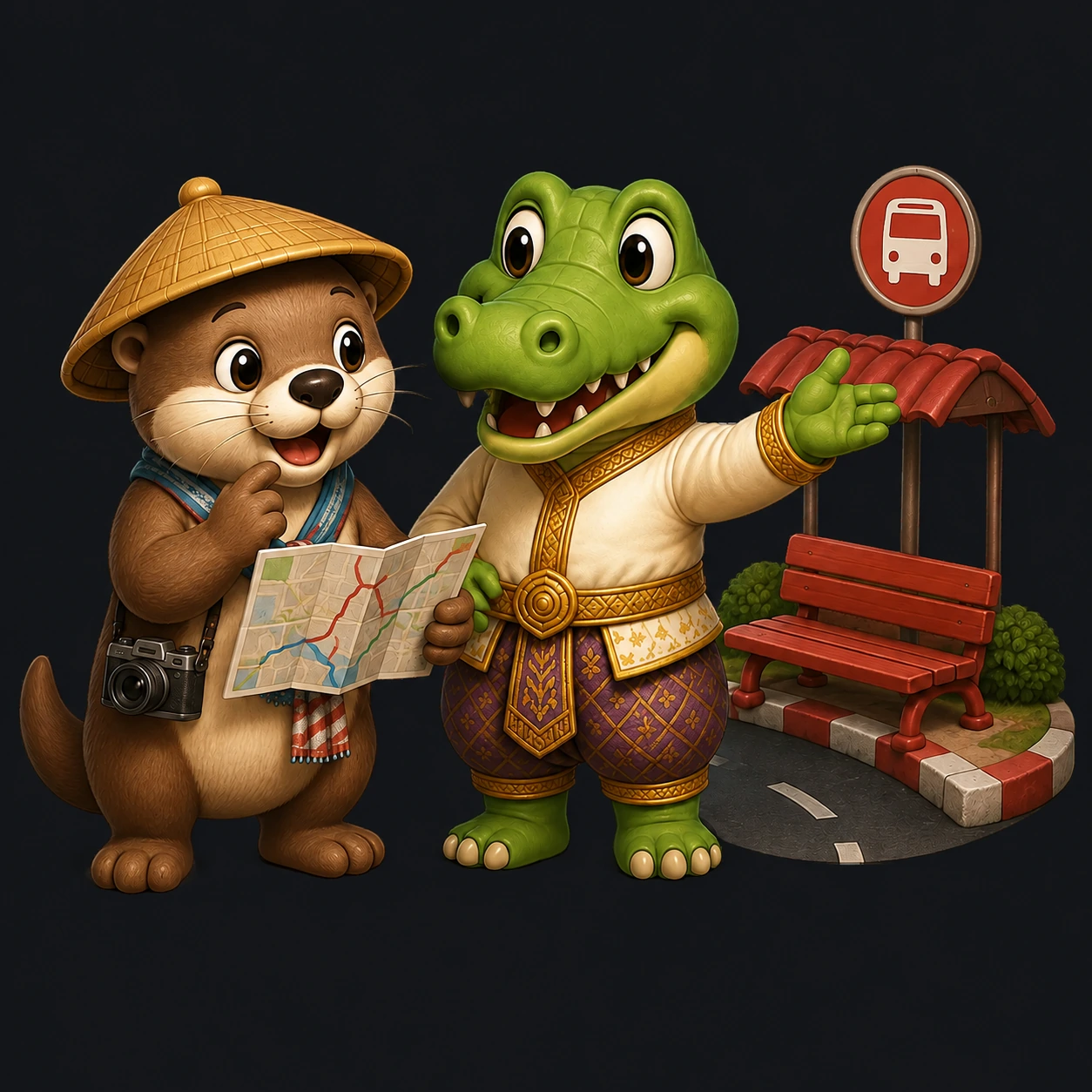
ไป (pai, go) and มา (maa, come) anchor directions. 'Go straight' is ตรงไป. Point with your open hand, never one finger.
To ask the way, name the place and add ที่ไหน thêe-nǎi, where. A market is ตลาด dtà-lâat and a temple is วัด wát. Answers often come as landmarks and gestures more than street names, so listen for ซ้าย sái, left, ขวา khwǎa, right, and the name of something nearby to turn at.
The open-hand rule extends to feet. They count as the lowest part of the body, so avoid pointing with them or using them to nudge something across the floor. Sitting with the soles of your feet aimed at someone is best avoided as well.
A common mix-up is between two kinds of help. ช่วยด้วย chûai-dûai is the cry for an emergency, the word you would shout. For a small favour, like asking someone to show you the way, use ช่วยหน่อย chûai nòi, which sounds relaxed and polite.
The words it talks about
Colour shows the tonemidlowfallinghighrisingHow tones work

Start learning Thai on Google Play
Start free, with optional Pro. See the course access page for details.
What free includes