 Sabai
Culture & Customs: what a phrasebook leaves out
The context beside the words in chapter 29. Learn what the situation asks of you, as well as what to say.
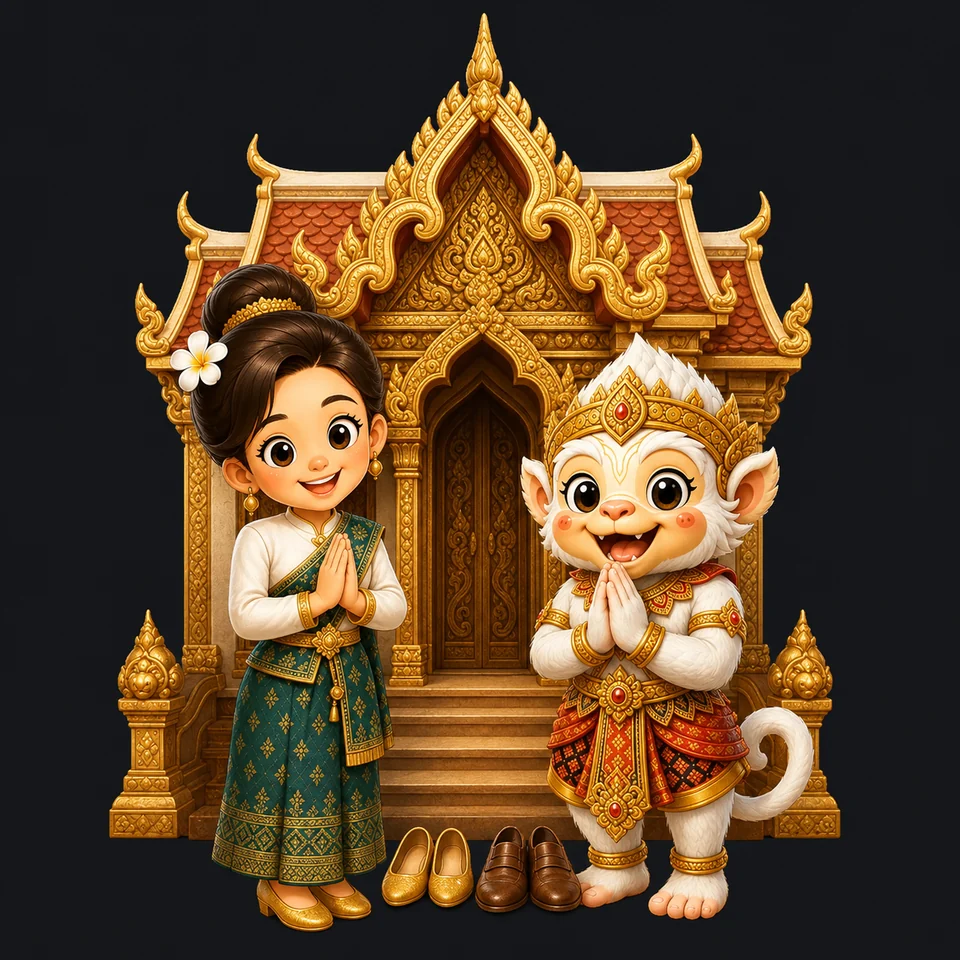
Culture chapter: respect for monks, the monarchy, and elders is deep. When unsure, watch what locals do - copying is the safest guide.
ทำบุญ tham-bun, making merit, is part of ordinary life. People offer food to a พระ phrá, a monk, on the morning alms round, give at a temple, or join a งานบุญ ngaan-bun, a merit-making event, on special days. Visitors are welcome to watch quietly, and if you join in, follow what the people around you do.
Inside a วัด wát, a temple, wear clothes that cover your shoulders and knees, take off your shoes before entering a hall, and sit with your feet tucked behind you, away from the Buddha images. Women avoid touching a monk or handing him things directly. Placing the item down nearby, or on a cloth he sets out, is the usual way.
ไหว้ wâi, the wai greeting, also follows age and status. Usually the younger person greets first, and the hands rise higher for someone you deeply respect. A common slip is giving a deep, formal wai to a shop assistant or a child, where a smile or a light wai back fits better.
The words it talks about
Colour shows the tonemidlowfallinghighrisingHow tones work

Start learning Thai on Google Play
Start free, with optional Pro. See the course access page for details.
What free includes